

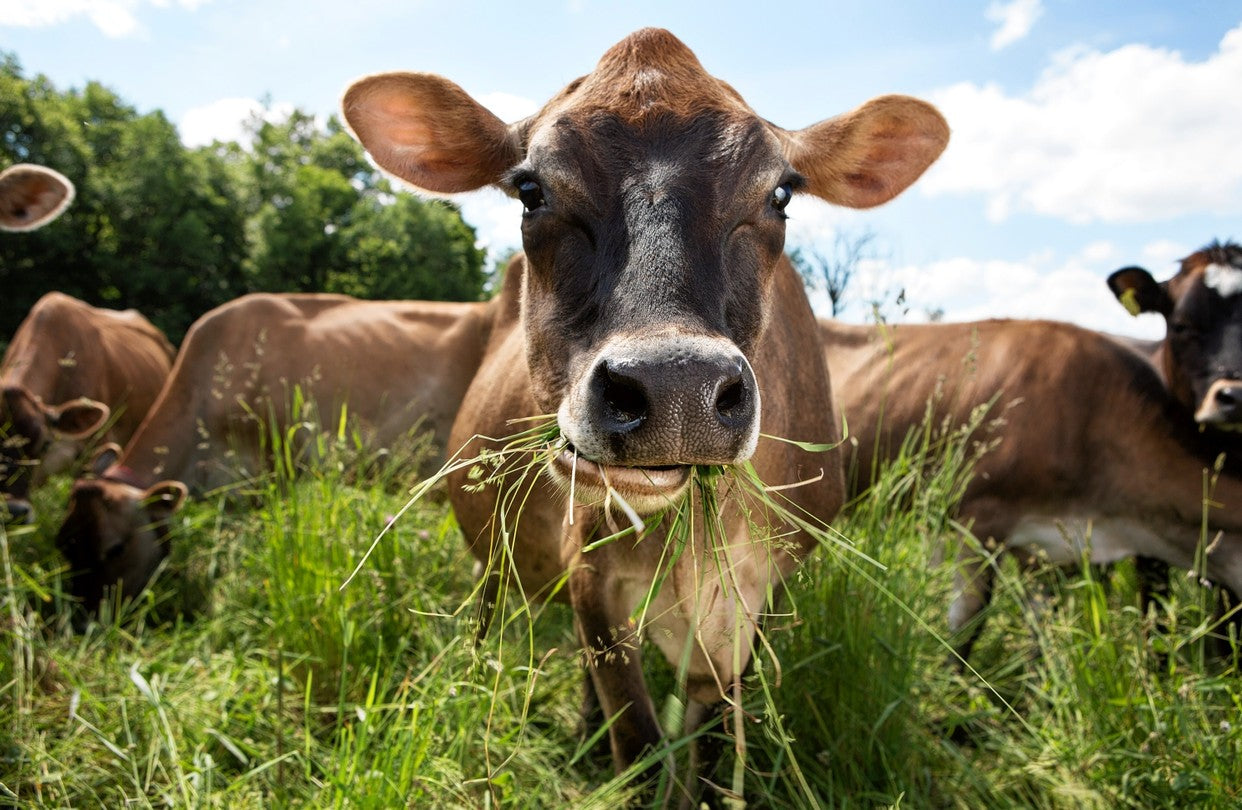
In recent years, many people have started paying closer attention to where their food comes from. One of the biggest shifts has been a growing interest in grass-fed, grass-finished beef sourced directly from local farms. Not only does this type of beef often taste better, but it also offers benefits for your health, the animals, and the environment.
What Does Grass-Fed & Grass-Finished Mean?
Cattle are natural herbivores designed to eat grass. Their unique digestive system (a rumen) allows them to extract nutrients from grasses and plants that humans cannot digest.
Grass-fed, grass-finished beef means the animal ate pasture plants for its entire life instead of being switched to grain during the final months before processing. Many cattle labeled “grass-fed” may still be finished on corn or grain, which is why the “grass-finished” label matters.
When cattle remain on pasture for their entire lives, the result is meat that more closely reflects the animal’s natural diet.
1. Better Nutritional Profile
Grass-finished beef typically contains a more favorable nutrient balance than grain-fed beef. It often has:
– Higher omega-3 fatty acids
– More CLA (conjugated linoleic acid), linked to anti-inflammatory benefits
– Increased vitamins A and E
– Higher levels of natural antioxidants
These nutrients come directly from the plants cattle consume in pasture systems.
2. Fewer Additives and Chemicals
Large industrial feedlots often rely on grain diets, growth stimulants, and routine antibiotics to keep animals healthy in crowded environments.
In contrast, many pasture-based farms raise cattle in open fields where they:
– Eat grass and forage
– Have access to fresh air and clean water
– Are rarely treated with antibiotics or hormones unless medically necessary
Buying directly from farmers also allows you to ask questions about how your food was raised, providing transparency that grocery store labels often cannot.
3. Healthier, More Humane Living Conditions
Pasture-raised cattle live in a much more natural environment than animals raised in feedlots. They can move freely, graze naturally, and spend their lives outdoors.
Grass-fed systems allow cattle to roam and forage as they move across pasture fields.
Animals raised this way experience less stress, which many farmers and consumers believe contributes to better meat quality.
4. Better for the Environment
When managed properly, pasture-raised cattle can actually help improve land health.
Many local farms practice rotational grazing, where cattle are moved from one pasture to another. This allows grass to regrow and helps:
– Build healthier soil
– Increase biodiversity
– Improve water retention
– Reduce erosion
Some regenerative farms even use cattle as part of a system designed to restore soil health and capture carbon in the ground.
5. Supporting Local Farmers and Your Community
Buying beef directly from a local farm does more than improve your diet—it strengthens your local food system.
When you buy local:
– More money stays in your community
– You support small family farms
– Your food travels fewer miles before reaching your table
Many farms also sell beef in bulk (quarters or halves), which can make high-quality grass-finished beef more affordable per pound than grocery store meat.
The Bottom Line
Choosing grass-fed, grass-finished beef from local farms is about more than just taste. It’s a choice that supports better nutrition, ethical animal care, environmental sustainability, and local agriculture.
When you know the farmer who raises your food, you gain something that grocery stores can’t offer: confidence in the quality and integrity of what you’re feeding your family.
0 Comments